GSF › Forums › TDTU › Session1. 2026 Cooperation between Dongshin University and Ton Duc Thang University
- This topic is empty.
-
AuthorPosts
-
2026-09-09 at 6:11 pm #4469
Do Kyong Kim
KeymasterSession 1. Jeonnam–Gwangju Integrated Special Metropolitan City and Korea–Vietnam Regional Innovation Cooperation
Cooperation between Dongshin University and Ton Duc Thang University in Energy, AI, Semiconductors, and Smart Technologies
1. Objective of the Session
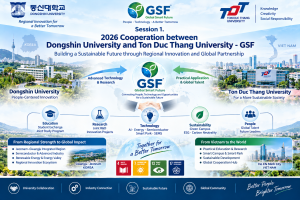
Session 1 aims to introduce the future-industry development strategy of the Jeonnam–Gwangju Integrated Special Metropolitan City and connect it with the education, research, and international cooperation capabilities of Ton Duc Thang University (TDTU).
The purpose is not simply to introduce the Jeonnam–Gwangju region, but to present it as a future industrial ecosystem centered on:
Semiconductors · AI · Energy · Secondary Batteries · Smart Industry
and to explore how this regional innovation ecosystem can be linked with TDTU through Dongshin University as a key academic and research partner.
Dongshin University, located in Naju, Jeonnam, has strengths in energy, AI, smart technologies, electrical engineering, renewable energy, IoT, and battery-related fields, making it a suitable partner for practical cooperation with TDTU.
2. Introduction to the Jeonnam–Gwangju Integrated Special Metropolitan City
Jeonnam and Gwangju are working to combine their respective strengths in:
- industry;
- research;
- energy;
- human resources;
- infrastructure;
- technology innovation.
The broader objective is to build an integrated metropolitan economic and industrial region that can function as a major future-industry hub in Korea.
Priority sectors include:
- Semiconductors
- Artificial Intelligence
- Robotics
- Energy
- Secondary Batteries
- Smart Industry
- Carbon-neutral Industry
Gwangju has strong capabilities in AI, R&D, and advanced industries, while Jeonnam offers major advantages in renewable energy, industrial land, ports, manufacturing, and energy infrastructure.
By integrating these strengths, the region has the potential to become a major Korean hub where advanced industry and energy technology are developed together.
3. Semiconductor Industry Cluster and University Cooperation
Gwangju and Jeonnam are being positioned as an important strategic region for expanding Korea’s semiconductor industry beyond the Seoul metropolitan area.
The region’s major advantages include:
- availability of large-scale industrial land;
- industrial water supply;
- large-scale renewable energy supply;
- AI research infrastructure;
- universities and research institutes;
- materials, components, and manufacturing capabilities.
A semiconductor industry requires not only fabrication facilities, but also highly stable, intelligent, and high-quality power systems.
Therefore, semiconductor development is directly linked with technologies such as:
- Smart Grid
- Grid Forming
- ESS
- Renewable Energy
- SEMS
- AI-based Power Management
- High-Quality Power Supply
This makes cooperation between the Faculty of Electrical and Electronics Engineering at TDTU and Dongshin University particularly relevant.
4. TDTU–Dongshin University Cooperation in Semiconductors and Electrical Engineering
TDTU has strong capabilities in:
- Electrical Engineering
- Electronics
- Automation
- Telecommunications
- Power Systems
- Energy
- Semiconductor-related technologies
Dongshin University also has educational and research strengths in:
- Electrical Engineering
- Energy Engineering
- Renewable Energy
- IoT
- AI
- ICT
- Smart Technology
- Secondary Batteries
Potential areas for joint research include:
Semiconductor and Electronics
- Semiconductor Design
- Power Semiconductors
- Smart Electronic Devices
- AI for Semiconductor Manufacturing
- Smart Factory
- Industrial Automation
Energy-linked Research
- High-quality power systems for semiconductor industries
- Power stability
- Distributed Energy
- ESS
- Smart Grid
- Grid Forming
5. Renewable Energy and Energy Valley
Jeonnam is one of Korea’s strongest regions in renewable energy, particularly in:
- Solar Power
- Offshore Wind Power
Naju, located in Jeonnam, is home to the Gwangju–Jeonnam Innovation City and Energy Valley, where major energy-related public institutions, research organizations, companies, and universities are concentrated.
The regional ecosystem supports research and industry development in:
- Smart Grid
- Distributed Energy
- ESS
- Renewable Energy
- Power ICT
- Power System Digitalization
- AI-based Energy Management
- Electric Vehicles
- Secondary Batteries
- Carbon-neutral Technologies
Dongshin University is located in Naju, which gives it a significant advantage in connecting education and research with Korea’s energy industry ecosystem.
6. Dongshin University–TDTU Joint Research in Smart Energy
Dongshin University and TDTU can develop joint research in the following areas:
- Grid Forming
- Smart Grid
- Microgrid
- Distributed Energy Resources
- Solar PV
- ESS
- Smart Metering
- AI-based Energy Management
- Smart Campus
- Carbon Monitoring
Rather than limiting cooperation to theoretical research, these technologies can be demonstrated on the TDTU campus.
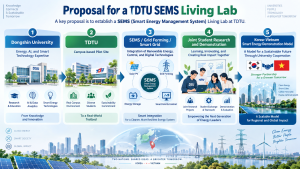
7. Proposal for a TDTU SEMS Living Lab
A key proposal is to establish a SEMS (Smart Energy Management System) Living Lab at TDTU.
The proposed structure is:
TDTU students could participate in:
- building-level electricity consumption analysis;
- solar generation data analysis;
- ESS operation analysis;
- power quality analysis;
- AI-based load forecasting;
- carbon emission calculation;
- energy-saving research.
The results could be used for:
- graduation projects;
- master’s and doctoral research;
- joint papers;
- seminars;
- capstone projects;
- Korea–Vietnam joint R&D projects.
8. AI and Advanced Industry Cooperation
AI is one of the key strategic areas connecting Jeonnam–Gwangju, Dongshin University, and TDTU.
Dongshin University is expanding AI-based convergence education in areas such as:
- Energy
- Smart Technology
- Healthcare
- Digital Content
TDTU also has strong capabilities in:
- AI
- ICT
- Automation
- Smart Systems
- Electrical and Electronics Engineering
Possible joint projects include:
- AI Energy Optimization
- Smart Grid Data Analytics
- Predictive Maintenance
- AI-based Facility Management
- Digital Twin
- AI + IoT for Smart Park
- Smart Mobility
- AI-based Tourism Services
- Smart Electronics
9. Smart Park as an Interdisciplinary Research Platform
The proposed Smart Park Pilot Site at TDTU can become a representative interdisciplinary project involving multiple departments.
The project can integrate:
Electrical Engineering + AI + Tourism + Sports + Environment
Potential technologies and services include:
- Smart Lighting
- IoT Sensors
- Solar Canopy
- Smart Energy
- EV Charging
- Water Management
- Digital Information Kiosks
- Smart Tourism
- Park Golf
- ESG Monitoring
TDTU could provide the pilot site and student participation, while Dongshin University could support research and education in:
- Energy
- AI
- IoT
- Smart Systems
- Tourism-related technologies
The Smart Park could therefore become a joint Living Lab representing practical cooperation between the two universities.
10. Proposed Cooperation Stages between Dongshin University and TDTU
The cooperation should be developed step by step rather than remaining at the level of an institutional MOU.
Stage 1. Joint Seminar
Faculty members and experts from both universities introduce:
- research areas;
- laboratories;
- technologies;
- student programs;
- potential joint research topics.
Stage 2. Joint Study Program
Mixed student teams can be formed in areas such as:
- Energy Team
- AI Team
- Smart Park Team
- Semiconductor & Smart Electronics Team
Stage 3. Student Exchange
Potential programs include:
- Short-term Training
- Summer School
- Internship
- Capstone Project
- Graduate Student Research Exchange
- Field Training
Stage 4. Joint Research
Priority areas include:
- SEMS
- Grid Forming
- Smart Energy
- AI
- Smart Park
- Semiconductors
Stage 5. International Joint R&D
The two universities can jointly explore funding and cooperation opportunities involving:
- Korean Government
- Vietnamese Government
- Local Governments
- Universities
- Companies
- International Organizations
11. Student-Centered Joint Program
A key feature of the proposed cooperation is direct student participation in real projects.
Students can participate in:
- field surveys;
- system design;
- data collection;
- AI and data analysis;
- energy experiments;
- prototype development;
- ESG evaluation;
- joint report writing;
- joint presentations.
A specific program can be developed under the title:
Dongshin–TDTU Joint Student Project
Korean and Vietnamese students would work together in mixed teams on real pilot projects.
12. Role of GSF
The GSF Expert Group can serve as a coordination platform connecting:
TDTU ↔ Dongshin University ↔ Jeonnam–Gwangju Regional Innovation Ecosystem
Its main roles may include:
- expert networking;
- joint project planning;
- connection with Korean technology companies;
- seminar coordination;
- development of the Joint Study Program;
- Smart Park development;
- SEMS demonstration support;
- international cooperation coordination.
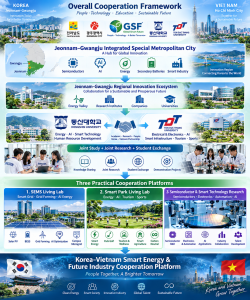
13. Overall Cooperation Framework
14. Expected Outcomes
Session 1 aims to achieve the following practical outcomes:
- Establishment of a Dongshin University–TDTU working group.
- Identification of participating professors and laboratories from both universities.
- Development of a TDTU SEMS Pilot Project.
- Development of a Smart Park Living Lab.
- Launch of a Joint Student Project.
- Development of short-term student exchange programs.
- Joint research in AI, Energy, and Semiconductors.
- Preparation of Korea–Vietnam international R&D projects.
- Connection between TDTU and the Jeonnam–Gwangju Energy Valley and regional innovation ecosystem.
- Development of a long-term institutional partnership between Dongshin University and TDTU.
15. Key Message of Session 1
“From Regional Innovation to University Cooperation”
The key objective of Session 1 is not simply to introduce the Jeonnam–Gwangju region.
It is to transform the region’s strengths in:
Energy + AI + Semiconductors + Smart Industry
into practical cooperation between:
Dongshin University + TDTU
through:
Student Exchange + Joint Research + Living Labs + Pilot Projects
and ultimately develop a long-term:
Korea–Vietnam Smart Energy & Future Industry Cooperation Platform
connecting universities, students, researchers, industries, and regional innovation ecosystems.
Session 1. 전남광주통합특별시와 한–베 지역혁신 협력
에너지·AI·반도체·스마트 기술을 중심으로 한 동신대학교–똔득탕대학교 협력 방향
1. 세션 목적
Session 1은 전남광주통합특별시의 미래산업 발전전략을 소개하고, 이를 똔득탕대학교(TDTU)의 교육·연구 역량과 연결하여 구체적인 한–베 대학 협력 모델을 발굴하는 데 목적이 있다.
단순히 전남·광주 지역을 소개하는 것이 아니라,
반도체 · AI · 에너지 · 이차전지 · 스마트산업
을 중심으로 발전하고 있는 한국의 지역혁신 생태계를 TDTU와 연결하고, 그 중심 대학 파트너로 동신대학교를 제안하는 것이다.
동신대학교는 전남 나주에 위치해 있으며 에너지, AI, 스마트 기술을 주요 특성화 분야로 육성하고 있어 TDTU와의 공동연구 및 학생교류에 적합한 대학이다.
2. 전남광주통합특별시 소개
전남과 광주는 각각 보유하고 있는 산업·연구·에너지·인재·인프라 역량을 하나의 광역경제권으로 결합하는 방향의 통합과 산업구조 개편을 추진하고 있다.
향후 전남광주통합특별시는 다음과 같은 미래산업 중심지로 발전하는 것을 목표로 한다.
- 반도체
- 인공지능(AI)
- 로봇
- 에너지
- 이차전지
- 스마트산업
- 친환경·탄소중립 산업
광주는 AI와 연구개발, 첨단산업 역량을 가지고 있으며, 전남은 대규모 재생에너지, 산업용지, 항만, 제조업, 에너지 인프라 등의 강점을 보유하고 있다.
이 두 지역이 연계될 경우 에너지와 첨단산업이 결합된 새로운 국가 미래산업 거점으로 발전할 가능성이 높다.
3. 반도체 산업 클러스터와 대학 협력 가능성
광주·전남은 한국의 반도체 산업을 수도권에서 남부권으로 확대하기 위한 새로운 전략지역으로 주목받고 있다.
지역의 강점은 다음과 같다.
- 대규모 산업부지 확보 가능성
- 산업용수 공급
- 대규모 재생에너지 공급
- AI 연구인프라
- 대학 및 연구기관
- 소재·부품·제조산업 기반
반도체 산업은 단순히 반도체 공장만으로 이루어지는 것이 아니라, 안정적인 전력 공급과 고품질 전력망이 매우 중요하다.
따라서 반도체 산업 발전은 다음 기술과 직접 연계된다.
- Smart Grid
- Grid Forming
- ESS
- 재생에너지
- SEMS
- AI 기반 전력관리
- 고품질 전력 공급
이 점에서 TDTU 전기전자공학과와 동신대학교의 협력은 매우 의미가 있다.
4. TDTU와 동신대학교의 반도체·전기전자 분야 협력
TDTU 전기전자공학과는 전기, 전자, 자동화, 통신, 전력시스템, 에너지, 반도체 등 다양한 분야를 연구하고 있다.
동신대학교 역시 다음과 같은 분야의 교육·연구 기반을 갖추고 있다.
- 전기공학
- 에너지공학
- 신재생에너지
- IoT
- AI
- 정보통신
- 스마트 기술
- 이차전지
두 대학은 향후 다음과 같은 공동연구를 추진할 수 있다.
반도체 및 전자 분야
- 반도체 설계
- 전력반도체
- 스마트 전자기기
- AI 기반 반도체 공정
- 스마트 팩토리
- 자동화 시스템
에너지 연계 분야
- 반도체 산업용 고품질 전력
- 전력 안정성
- 분산전원
- ESS
- Smart Grid
- Grid Forming
5. 재생에너지와 Energy Valley
전남은 한국에서 태양광과 해상풍력 자원이 가장 풍부한 지역 중 하나이다.
특히 나주를 중심으로 조성된 Energy Valley는 한국전력공사(KEPCO)를 비롯한 에너지 관련 공공기관, 연구기관, 대학, 기업이 집중된 대표적인 에너지 산업 클러스터이다.
주요 연구 및 산업 분야는 다음과 같다.
- Smart Grid
- 분산에너지
- ESS
- 신재생에너지
- 전력 ICT
- 전력망 디지털화
- AI 기반 전력관리
- 전기자동차
- 이차전지
- 탄소중립
동신대학교는 나주에 위치하고 있어 이러한 Energy Valley 생태계와 직접적으로 연결되어 있다는 점이 큰 강점이다.
6. 동신대학교–TDTU Smart Energy 공동연구
동신대학교와 TDTU는 다음과 같은 에너지 분야 공동연구를 추진할 수 있다.
- Grid Forming
- Smart Grid
- Microgrid
- Distributed Energy Resources
- 태양광
- ESS
- Smart Meter
- AI 기반 에너지 관리
- Smart Campus
- 탄소배출 모니터링
이를 단순 연구과제에 그치지 않고 TDTU 캠퍼스에서 실제로 실증하는 방향으로 발전시킬 수 있다.
7. TDTU SEMS Living Lab 제안
TDTU 캠퍼스를 대상으로 SEMS(Smart Energy Management System) Living Lab 구축을 제안한다.
기본 구조는 다음과 같다.
TDTU 학생들은 다음과 같은 프로젝트에 참여할 수 있다.
- 건물별 전력사용량 분석
- 태양광 발전 데이터 분석
- ESS 운전 분석
- 전력품질 분석
- AI 기반 부하예측
- 탄소배출량 계산
- 에너지 절감방안 연구
8. AI 및 첨단산업 협력
AI는 전남광주통합특별시의 핵심 미래산업 중 하나이며, TDTU와 동신대학교의 공동협력 분야로 적합하다.
동신대학교는 AI를 에너지, 스마트 기술, 헬스케어, 콘텐츠 등과 융합하는 방향으로 교육과 연구를 확대하고 있다.
TDTU 역시 AI, ICT, 자동화, 스마트 시스템 분야의 연구기반을 갖추고 있어 다음과 같은 공동 프로젝트가 가능하다.
- AI Energy Optimization
- Smart Grid Data Analysis
- Predictive Maintenance
- AI 기반 시설관리
- Digital Twin
- AI + IoT Smart Park
- Smart Mobility
- AI 기반 관광서비스
- 스마트 전자기기
9. Smart Park와 대학 간 융합연구
Smart Park Pilot Site는 동신대학교와 TDTU의 여러 전공이 동시에 참여할 수 있는 대표적인 융합 프로젝트가 될 수 있다.
연계 가능한 분야는 다음과 같다.
전기전자 + AI + 관광 + 스포츠 + 환경
Smart Park 시범사이트에 적용할 수 있는 기술은 다음과 같다.
- Smart Lighting
- IoT Sensor
- Solar Canopy
- Smart Energy
- EV Charging
- Water Management
- Digital Information Kiosk
- Smart Tourism
- Park Golf
- ESG Monitoring
TDTU는 시범사이트와 학생 참여를 담당하고, 동신대학교는 에너지·AI·IoT 등 기술분야 연구와 교육을 지원하는 구조가 가능하다.
10. 동신대학교–TDTU 교류 협력 단계
두 대학의 협력은 단순 MOU 체결에 그치지 않고 다음과 같이 단계적으로 추진할 수 있다.
1단계. Joint Seminar
양 대학의 교수 및 전문가가 다음 내용을 소개한다.
- 연구분야
- 연구실
- 보유기술
- 학생 프로그램
- 공동연구 가능 분야
2단계. Joint Study Program
학생들을 다음과 같은 융합팀으로 구성한다.
- Energy Team
- AI Team
- Smart Park Team
- Semiconductor & Smart Electronics Team
3단계. 학생 교류
다음 프로그램을 추진할 수 있다.
- 단기연수
- Summer School
- Internship
- Capstone Project
- 대학원생 공동연구
- 현장실습
4단계. 공동연구
주요 공동연구 분야는 다음과 같다.
- SEMS
- Grid Forming
- Smart Energy
- AI
- Smart Park
- Semiconductor
5단계. 국제 공동 R&D
향후 다음 기관과 연계한 국제 공동과제를 발굴할 수 있다.
- 한국 정부
- 베트남 정부
- 지방정부
- 대학
- 기업
- 국제기구
11. 학생 참여 중심의 공동 프로그램
본 협력의 핵심은 학생이 실제 프로젝트에 참여하는 것이다.
학생 참여 분야는 다음과 같다.
- 현장조사
- 설계
- 데이터 수집
- AI 분석
- 에너지 실험
- Prototype 개발
- ESG 평가
- 공동보고서 작성
- 공동발표
이를 통해 다음과 같은 프로그램을 제안할 수 있다.
Dongshin–TDTU Joint Student Project
한국과 베트남 학생들이 하나의 팀을 구성하여 실제 시범사업을 수행하는 방식이다.
12. GSF의 역할
GSF 전문가 그룹은 다음 기관을 연결하는 플랫폼 역할을 수행한다.
TDTU ↔ 동신대학교 ↔ 전남·광주 지역혁신 생태계
주요 역할은 다음과 같다.
- 전문가 연결
- 공동 프로젝트 기획
- 기술기업 연결
- 세미나 운영
- Joint Study Program 구성
- Smart Park 개발
- SEMS 실증 지원
- 국제협력 조정
13. 전체 협력 구조
14. 기대성과
Session 1을 통해 다음과 같은 구체적인 성과를 목표로 한다.
- 동신대학교–TDTU 공동 실무협의체 구성
- 양 대학의 참여 교수 및 연구실 발굴
- TDTU SEMS Pilot Project 구체화
- Smart Park Living Lab 구축
- 공동 학생 프로젝트 운영
- 단기 학생교류 프로그램 추진
- AI·Energy·Semiconductor 공동연구
- 한–베 국제 R&D 과제 발굴
- TDTU와 전남·광주 Energy Valley 및 지역혁신기관 연계
- 동신대학교–TDTU 장기 협력체계 구축
15. Session 1 핵심 메시지
“From Regional Innovation to University Cooperation”
이번 Session 1의 핵심은 전남광주통합특별시의 지역혁신 역량을 단순히 소개하는 것이 아니라,
Energy + AI + Semiconductor + Smart Industry
의 강점을
동신대학교 + TDTU
간의 실질적인 대학 협력으로 연결하는 것이다.
이를 통해
학생교류 + 공동연구 + Living Lab + Pilot Project
를 중심으로 한 새로운 한–베 대학 협력모델을 구축하고, 장기적으로는
Korea–Vietnam Smart Energy & Future Industry Cooperation Platform
으로 발전시키는 것을 목표로 한다.
아래와 같이 Session 1을 단순 지역 소개가 아니라, 전남광주통합특별시의 미래산업 전략을 동신대학교–TDTU 교류협력으로 연결하는 세션으로 구체화하는 것이 좋습니다.
Session 1. Đô thị Đặc biệt Tích hợp Jeonnam–Gwangju và Hợp tác Đổi mới Khu vực Việt Nam – Hàn Quốc
Định hướng hợp tác giữa Đại học Dongshin và Đại học Tôn Đức Thắng trong các lĩnh vực Năng lượng, AI, Bán dẫn và Công nghệ Thông minh
1. Mục tiêu của Session
Session 1 nhằm giới thiệu chiến lược phát triển mới của Đô thị Đặc biệt Tích hợp Jeonnam–Gwangju tại Hàn Quốc và xác định các lĩnh vực có thể kết nối trực tiếp với năng lực nghiên cứu, đào tạo và hợp tác quốc tế của Đại học Tôn Đức Thắng (TDTU).
Trọng tâm của session không chỉ là giới thiệu Jeonnam–Gwangju như một khu vực hành chính mới, mà là trình bày khu vực này như một hệ sinh thái công nghiệp tương lai, nơi các lĩnh vực:
Bán dẫn – AI – Năng lượng – Pin – Smart Grid – Smart Industry
được phát triển theo hướng tích hợp.
Từ nền tảng này, Đại học Dongshin, nằm tại Naju trong vùng đổi mới Gwangju–Jeonnam, có thể đóng vai trò là đối tác học thuật và nghiên cứu của TDTU, đặc biệt trong các lĩnh vực năng lượng, AI, công nghệ thông minh và đào tạo nguồn nhân lực. Dongshin University hiện xác định Energy·AI, Smart Healthcare và Global K-Culture là các lĩnh vực chuyên môn hóa chính; riêng lĩnh vực năng lượng tập trung vào sự hội tụ giữa energy, ICT/SW, pin thứ cấp và năng lượng tái tạo. (동신대학교)
2. Giới thiệu Đô thị Đặc biệt Tích hợp Jeonnam–Gwangju
Jeonnam và Gwangju đang thúc đẩy việc hình thành một vùng tích hợp mới nhằm kết hợp các nguồn lực về:
- công nghiệp;
- năng lượng;
- AI;
- khoa học công nghệ;
- trường đại học;
- viện nghiên cứu;
- doanh nghiệp;
- hạ tầng logistics;
- nguồn nhân lực.
Một trong những mục tiêu quan trọng là xây dựng một siêu vùng đổi mới công nghiệp, có khả năng cạnh tranh ở cấp quốc gia và quốc tế.
Trong bối cảnh này, Jeonnam–Gwangju đang tập trung vào các ngành:
- bán dẫn;
- AI;
- robot;
- năng lượng;
- pin thứ cấp;
- công nghiệp thông minh;
- công nghiệp carbon thấp.
Đối với TDTU, điều này tạo ra cơ hội hợp tác không chỉ với một trường đại học Hàn Quốc riêng lẻ mà với cả một hệ sinh thái vùng về năng lượng và công nghệ cao.
3. Cụm công nghiệp bán dẫn và cơ hội hợp tác đào tạo
Gwangju và Jeonnam đang thúc đẩy chiến lược cụm bán dẫn ba trục, đồng thời đề xuất thu hút Cụm bán dẫn quốc gia thứ hai về khu vực. Jeonnam nhấn mạnh lợi thế về đất công nghiệp, nguồn nước, năng lượng tái tạo và nhân lực, trong khi chiến lược khu vực kết hợp năng lực AI và nghiên cứu của Gwangju với cơ sở công nghiệp và năng lượng của Jeonnam. (전라남도청)
Điều này phù hợp với hướng phát triển của TDTU.
Khoa Điện – Điện tử TDTU hiện đào tạo và nghiên cứu trong các lĩnh vực điện–điện tử, viễn thông, điều khiển–tự động hóa, hệ thống năng lượng, lưới điện, năng lượng tái tạo và cả thiết kế vi mạch bán dẫn. (feee.tdtu.edu.vn)
Do đó, Dongshin University và TDTU có thể cùng phát triển các chủ đề như:
- Semiconductor Power Systems
- Semiconductor Design and Smart Electronics
- AI for Semiconductor Manufacturing
- Energy-efficient Semiconductor Infrastructure
- Smart Factory
- Industrial Automation
- Power Quality for High-tech Industry
Đặc biệt, việc phát triển bán dẫn đòi hỏi nguồn điện ổn định, chất lượng cao và carbon thấp. Vì vậy, nghiên cứu bán dẫn có thể được kết nối trực tiếp với Smart Grid, SEMS, ESS và Grid Forming.
4. Năng lượng tái tạo và Energy Valley
Một trong những lợi thế lớn nhất của Jeonnam là nền tảng năng lượng tái tạo và hệ sinh thái Energy Valley tại Naju.
Khu vực Naju có sự hiện diện của các tổ chức và doanh nghiệp năng lượng lớn, tạo điều kiện thuận lợi cho nghiên cứu và đào tạo liên quan đến:
- lưới điện;
- năng lượng tái tạo;
- ESS;
- điện lực ICT;
- quản lý năng lượng;
- điện phân tán;
- Smart Grid;
- carbon neutrality.
Dongshin University nằm ngay tại Naju và có College of Energy and Engineering, với các ngành như Electrical Engineering, Future Energy Technology, Battery Engineering, IoT, Renewable Energy, Energy Management, EV và ICT. (동신대학교)
Khoa Điện – Điện tử TDTU cũng đã tích cực triển khai hợp tác quốc tế về power grids, renewable energy và energy efficiency, bao gồm các chương trình với University of Agder và các đối tác quốc tế khác. (feee.tdtu.edu.vn)
Vì vậy, hai trường có cơ sở tốt để phát triển:
Dongshin–TDTU Smart Energy Joint Research
Các chủ đề đề xuất:
- Grid Forming
- Smart Grid
- Microgrid
- Distributed Energy Resources
- Solar PV
- ESS
- AI-based Energy Management
- Building Energy Management
- Smart Campus
- Carbon Monitoring
5. SEMS Living Lab tại TDTU
Một đề xuất quan trọng là xây dựng SEMS Living Lab tại TDTU.
TDTU có thể đóng vai trò là địa điểm thử nghiệm tại Việt Nam, trong khi Dongshin University hỗ trợ về:
- nghiên cứu;
- chuyên gia;
- công nghệ năng lượng;
- phân tích dữ liệu;
- đào tạo sinh viên.
Cấu trúc đề xuất:
Dongshin University
→ Energy & AI Knowledge↓
TDTU
→ Campus Pilot Site↓
SEMS / Grid Forming / Smart Grid
↓
Student Joint Research
↓
Vietnam–Korea Demonstration Model
Sinh viên của hai trường có thể cùng tham gia thu thập và phân tích:
- dữ liệu điện năng;
- tải tiêu thụ;
- năng lượng tái tạo;
- ESS;
- chất lượng điện;
- lượng phát thải carbon.
Kết quả có thể được sử dụng cho:
- luận văn;
- bài báo chung;
- hội thảo;
- capstone project;
- dự án R&D Việt Nam–Hàn Quốc.
6. AI và công nghiệp tiên tiến
AI là một trong những điểm kết nối mạnh giữa hai khu vực và hai trường.
Dongshin University đang đẩy mạnh mô hình đào tạo AI–Semiconductor–Energy và triển khai giáo dục AI trên nhiều ngành. (동신대학교)
TDTU cũng có nền tảng mạnh về điện–điện tử, tự động hóa, IoT, xử lý tín hiệu, hệ thống năng lượng và công nghệ thông minh. Khoa Điện – Điện tử TDTU gần đây cũng đã hợp tác với doanh nghiệp trong các lĩnh vực AI, UAV, bán dẫn, năng lượng mới và công nghệ cao. (feee.tdtu.edu.vn)
Các lĩnh vực nghiên cứu chung có thể bao gồm:
- AI Energy Optimization
- Smart Grid Analytics
- Predictive Maintenance
- AI-based Facility Management
- Digital Twin
- AI + IoT for Smart Park
- Smart Mobility
- AI-based Tourism Services
- Semiconductor and Intelligent Electronics
7. Smart Park như một nền tảng nghiên cứu liên ngành
Ngoài năng lượng, hợp tác Dongshin–TDTU có thể được mở rộng thông qua Smart Park Pilot Site tại TDTU.
Smart Park sẽ kết nối nhiều chuyên ngành:
Electrical Engineering + AI + Tourism + Sports + Environment
Các công nghệ có thể bao gồm:
- Smart Lighting
- IoT sensors
- Smart Energy
- Solar Canopy
- EV charging
- Water management
- Digital information
- Smart tourism
- Sports technology
- Park Golf
- ESG monitoring
TDTU cung cấp địa điểm và sinh viên tham gia, trong khi Dongshin University có thể tham gia với các nhóm nghiên cứu về:
- năng lượng;
- AI;
- IoT;
- cảnh quan;
- du lịch;
- nội dung số.
Như vậy, Smart Park có thể trở thành Joint Living Lab đại diện cho hợp tác giữa hai trường.
8. Mô hình trao đổi Dongshin University – TDTU
Đề xuất không giới hạn hợp tác ở MOU, mà phát triển theo mô hình từng bước.
Giai đoạn 1 – Joint Seminar
Giảng viên và chuyên gia hai bên giới thiệu:
- năng lực nghiên cứu;
- phòng thí nghiệm;
- đề tài nghiên cứu;
- nhu cầu hợp tác.
Giai đoạn 2 – Joint Study Program
Thành lập các nhóm sinh viên hỗn hợp:
- Energy Team
- AI Team
- Smart Park Team
- Semiconductor/Smart Electronics Team
Giai đoạn 3 – Student Exchange
Phát triển:
- chương trình 1–2 tuần;
- Summer School;
- internship;
- capstone project;
- graduate student exchange.
Giai đoạn 4 – Joint Research
Phát triển đề tài:
- SEMS;
- Grid Forming;
- Smart Energy;
- AI;
- Smart Park;
- Semiconductor.
Giai đoạn 5 – Joint R&D Project
Cùng tìm kiếm các chương trình hỗ trợ của:
- Hàn Quốc;
- Việt Nam;
- các chính quyền địa phương;
- doanh nghiệp;
- chương trình quốc tế.
9. Vai trò của sinh viên
Điểm quan trọng của chương trình là sinh viên không chỉ tham dự hội thảo mà phải trực tiếp tham gia dự án.
Sinh viên có thể thực hiện:
- khảo sát hiện trường;
- thiết kế hệ thống;
- thu thập dữ liệu;
- AI/data analysis;
- thử nghiệm năng lượng;
- xây dựng prototype;
- phân tích ESG;
- viết báo cáo;
- trình bày kết quả chung.
Có thể thiết lập chương trình:
Dongshin–TDTU Joint Student Project
với các nhóm hỗn hợp sinh viên Việt Nam và Hàn Quốc.
10. Vai trò kết nối của GSF
GSF có thể đóng vai trò nền tảng điều phối giữa:
TDTU ↔ Dongshin University ↔ Jeonnam Regional Innovation Ecosystem
Các chức năng chính:
- kết nối chuyên gia;
- thiết kế pilot project;
- kết nối doanh nghiệp Hàn Quốc;
- hỗ trợ seminar;
- xây dựng Joint Study;
- phát triển Smart Park;
- phát triển SEMS;
- kết nối nghiên cứu vùng.
11. Mô hình hợp tác tổng thể đề xuất
12. Kết quả kỳ vọng
Thông qua hợp tác Dongshin University–TDTU, Session 1 hướng tới các kết quả cụ thể sau:
- Thành lập nhóm làm việc chung Dongshin–TDTU.
- Xác định giáo sư và phòng thí nghiệm phù hợp ở hai trường.
- Xây dựng SEMS Pilot Project tại TDTU.
- Phát triển Smart Park Living Lab.
- Xây dựng Joint Student Program.
- Tổ chức trao đổi sinh viên ngắn hạn.
- Phát triển nghiên cứu chung về AI–Energy–Semiconductor.
- Chuẩn bị các dự án R&D Việt Nam–Hàn Quốc.
- Kết nối TDTU với Energy Valley và hệ sinh thái đổi mới Jeonnam–Gwangju.
- Xây dựng quan hệ hợp tác dài hạn giữa TDTU và Dongshin University.
Thông điệp chính của Session 1
“From Regional Innovation to University Cooperation”
Định hướng của chương trình là chuyển các thế mạnh của khu vực Jeonnam–Gwangju về:
Energy + AI + Semiconductor + Smart Industry
thành các chương trình hợp tác thực tế giữa:
Dongshin University + TDTU
và thông qua:
Students + Joint Research + Living Labs + Pilot Projects
tạo ra một mô hình hợp tác đổi mới thực tiễn giữa Việt Nam và Hàn Quốc.
TDTU có nền tảng quốc tế hóa mạnh và xem hợp tác quốc tế, nghiên cứu chung, chương trình đào tạo và trao đổi ngắn hạn là các ưu tiên chiến lược, do đó mô hình này phù hợp với định hướng phát triển hiện nay của trường. (tdtu.edu.vn)
-
AuthorPosts
- You must be logged in to reply to this topic.