- This topic is empty.
-
AuthorPosts
-
2026-09-09 at 6:04 pm #4466
Do Kyong Kim
KeymasterSession 2. 2026 GSF–TDTU Joint Study Program
TDTU FEEE-Based Study on Energy · IoT · Big Data · AI Applications
Key Presentation Message
The focus of Session 2 is not to develop large-scale Smart Park, SEMS, or TerraChar facilities at the initial stage.
Instead, the program will use the strengths of the TDTU Faculty of Electrical & Electronics Engineering (FEEE) in:
Energy + Electronics + IoT + Big Data + AI + Automatic Control
and apply these technologies to small-scale test sites.
The basic concept is:
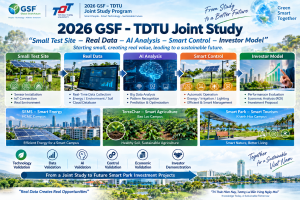
Small Test Site → Real Data → AI Analysis → Smart Control → Investor Proposal
1. Introduction to Session 2
Session 2 of the GSF–TDTU Joint Study Program is designed as a practical study program centered on TDTU FEEE.
Therefore, the main academic and technical areas are:
- Energy
- IoT
- Big Data
- AI
- Automatic Control
- Monitoring
- Data Acquisition
- Smart Operation
These technologies will be applied to three application areas:
SEMS
Energy management and optimization
Smart Park
Smart facility monitoring and operation
TerraChar
Soil and environmental monitoring with automated control
2. Basic Concept of the Joint Study
Although the three application areas are different, the underlying technical structure is common.
Common Technology Flow
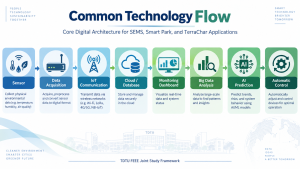
Therefore, the core technical framework of the Joint Study is:
Sensor + IoT + Data + AI + Automation
3. Joint Study Implementation Direction
The initial stage will not focus on large-scale infrastructure investment.
Instead, each campus will operate a small-scale test site to collect real data and verify technologies.
Implementation Flow
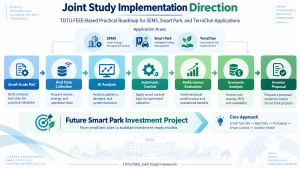
The results can later be used to prepare practical proposals for Smart Park investors, companies, and public-sector partners.
4. Program 1 – SEMS Joint Study
Smart Energy · IoT · AI Energy Management
The first core program is SEMS.
Based on TDTU FEEE capabilities in electrical engineering, electronics, power systems, and control, students will study real energy data and explore how AI can optimize energy operation.
Main study areas include:
- Smart Meter
- Solar PV
- Inverter
- ESS
- Load Monitoring
- Peak Management
- Energy Dashboard
- AI Energy Analysis
- Grid Forming
- Smart Grid
5. Cooperation with Solar Solution JSC
Solar Solution JSC is proposed as a technical partner supporting field-oriented solar and energy applications in the SEMS Joint Study.
Its potential roles include:
Solar PV
- solar generation;
- inverter operation;
- generation data;
- system efficiency analysis.
Energy Monitoring
- Smart Meter;
- load data;
- power quality;
- monitoring.
ESS
- battery monitoring;
- charging / discharging;
- peak management.
SEMS Integration
- solar data;
- load data;
- ESS data;
- environmental data.
These datasets can be used directly by students for practical SEMS analysis.
Reference:
Solar Solution – SEMS Joint Study
https://g-smartfuture.com/forums/topic/solar-solution-sems-joint-study/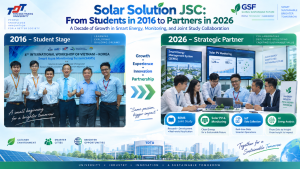
6. Participation of ITUS
ITUS is proposed to support the SEMS Joint Study mainly in the area of AI-based energy consumption management and data analysis.
Key areas include:
- AI Energy Management
- Energy Consumption Analysis
- Peak Demand Analysis
- Abnormal Consumption Detection
- PV / BESS Simulation
- ROI Analysis
- Student Technical Mentoring
Through this cooperation, students can analyze real electricity data and study practical AI-based energy optimization models.
Reference:
ITUS Participation in the 2026 GSF–TDTU SEMS Joint Study
https://g-smartfuture.com/forums/topic/itus-participation-in-the-2026-gsf-tdtu-sems-joint-study/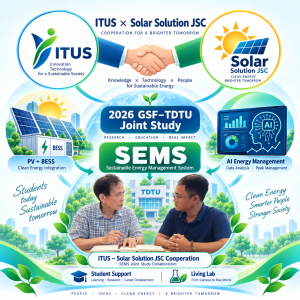
7. SEMS Student Team
Approximately 3 Students
Student 1 – Energy & IoT
Main tasks:
- Smart Meter
- Sensor
- Inverter
- Gateway
- Energy Data Collection
Student 2 – Big Data & AI
Main tasks:
- Data Cleaning
- Time-Series Analysis
- Demand Forecasting
- Peak Analysis
- AI Prediction
Student 3 – Control & Simulation
Main tasks:
- ESS Simulation
- Peak Shaving
- PV Self-Consumption
- Automatic Control
- ROI Simulation
8. Core SEMS Research Question
A central research question can be presented as:
“How can real solar generation and electricity consumption data be collected through IoT and optimized through AI-based analysis and ESS operation?”
9. Program 2 – Smart Park IT Joint Study
IoT · Monitoring · Automation · AI
The second program focuses on Smart Park.
The emphasis is not on large-scale park development itself, but on the IT technologies required for smart operation.
Main study targets include:
- Smart Lighting
- Solar Canopy
- Smart Bench
- Smart Irrigation
- Environmental Sensors
- Smart Café
- Visitor Monitoring
- Facility Monitoring
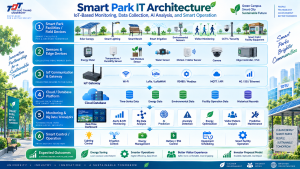
10. Smart Park IT Architecture
The basic technical structure is:
11. Smart Park Automatic Control Study
Students can study practical control functions such as:
Lighting Control
- time-based lighting control;
- visitor-based lighting;
- energy-saving operation.
Irrigation Control
- soil moisture;
- weather data;
- automatic irrigation.
Energy Control
- solar generation;
- battery use;
- load management.
Facility Monitoring
- abnormal condition detection;
- failure prediction;
- maintenance support.
Visitor Analysis
- visiting time;
- usage pattern;
- facility utilization.
12. Small-Scale Smart Park Test Site
The Smart Park test site should remain small at the initial stage.
A recommended size is approximately:
500㎡ – 2,000㎡
A basic test configuration may include:
- 1 Solar Canopy
- 1–2 Smart Benches
- Smart Lighting
- Smart Meter
- IoT Gateway
- Environmental Sensors
- Smart Irrigation
- Monitoring Dashboard
This scale is sufficient to collect real data and demonstrate core technologies to future investors.
13. Program 3 – TerraChar Smart Monitoring Study
Soil Sensor · IoT · Data · AI · Automatic Control
The third program is TerraChar.
Here again, the focus is not agriculture itself, but the application of FEEE-oriented IT technologies to environmental and agricultural monitoring.
Main technologies include:
- Soil Moisture Sensor
- Soil Temperature Sensor
- pH Sensor
- EC Sensor
- Weather Sensor
- Irrigation Monitoring
- Pump Control
- Environmental Monitoring
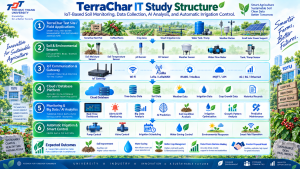
14. TerraChar IT Study Structure
15. Main TerraChar Study Topics
Students can compare TerraChar-treated and untreated plots.
Comparative Data
- soil moisture;
- soil temperature;
- pH;
- EC;
- irrigation amount;
- weather conditions;
- crop growth.
Core Research Question
“How does TerraChar affect soil conditions and irrigation efficiency, and how much water and energy can be saved through AI-based automatic irrigation?”
16. Regional Test Site Operation
The three regional sites should be operated as small-scale demonstration sites, not as full-scale development projects.
HCMC Campus
Smart Energy IT Test Site
Target:
One building or one selected electrical load section
Main study areas:
- SEMS
- Smart Meter
- Solar Data
- AI Energy Analysis
- ESS Simulation
Purpose:
Urban Smart Energy Model
Bao Loc Campus
TerraChar + Smart Agriculture IT Test Site
Bao Loc can later be expanded into a broader 3ha Smart Park and TerraChar demonstration complex.
However, during the initial Joint Study stage, only a small portion should be used as a focused test bed.
Recommended initial scale:
Approximately 500㎡ – 1,000㎡
Main study areas:
- Soil Sensor
- IoT
- Weather Data
- TerraChar
- Smart Irrigation
- AI Analysis
Purpose:
To collect real data for the future 3ha development and prepare investment proposal materials.
Khanh Hoa Campus
Coastal Smart Park IT Test Site
Recommended initial scale:
Approximately 500㎡ – 1,500㎡
Main study areas:
- Smart Lighting
- Solar Canopy
- Environmental Sensors
- Visitor Monitoring
- Smart Park Dashboard
- AI Operation Analysis
Purpose:
To develop a future investment model combining Tourism, Wellness, and Smart Park applications.
17. Purpose of the Test Sites
The purpose of each test site is not to complete a full facility.
The key objectives are:
1. Technology Validation
Does the technology work under real conditions?
2. Data Validation
Can the required data be collected reliably?
3. AI Validation
Can AI analysis improve operation?
4. Control Validation
Can automatic control be implemented?
5. Economic Validation
Is the model economically feasible when scaled up?
6. Investor Demonstration
Can actual performance data be shown to potential investors?
18. Smart Park Investor Proposal Model
One of the main outcomes of the Joint Study is the development of a Smart Park Investor Proposal Model.
Students and experts can jointly prepare the following packages.
Technical Package
- System Architecture
- Sensor Layout
- IoT Structure
- Network Diagram
- Data Architecture
- Automatic Control Logic
Data Package
- Energy Data
- Environmental Data
- Facility Data
- AI Analysis
- Prediction Results
Economic Package
- CAPEX concept
- OPEX
- Energy Saving
- ROI
- Payback Period
- Expansion Cost
Presentation Package
- Pilot Site
- Dashboard
- Real-Time Data
- AI Results
- Investment Concept
19. Student Participation Structure
Approximately three students will participate in each program.
Program Students Main Study Area SEMS Approx. 3 Energy · IoT · AI Smart Park Approx. 3 IoT · Monitoring · Automation TerraChar Approx. 3 Sensor · Data · AI Control Total Approx. 9 Basic team structure:
3 Students + TDTU FEEE Professor + GSF Expert + Industry Partner
20. Student Study Process
Phase 1. Technology Study
- Sensor
- IoT
- Energy
- Data
- AI
- Control
Phase 2. Test Site Design
- Sensor Layout
- Gateway
- Network
- Database
- Dashboard
Phase 3. Installation
- equipment installation;
- communication setup;
- data verification.
Phase 4. Data Collection
- Real-Time Data
- Historical Data
- Data Cleaning
Phase 5. Big Data & AI
- Pattern Analysis
- Forecasting
- Anomaly Detection
- Optimization
Phase 6. Automatic Control
- Control Logic
- Simulation
- Field Test
Phase 7. Investor Model
- technical report;
- economic analysis;
- ROI;
- investment proposal.
21. Definition of Partner Roles
TDTU FEEE
- Energy
- Electronics
- IoT
- Control
- Data
- AI
- Student Research
GSF
- Joint Study planning
- international cooperation
- expert coordination
- company linkage
- project development
Solar Solution JSC
- Solar PV
- Inverter
- Smart Meter
- Field Data
- SEMS PoC
ITUS
- AI Energy Management
- Data Analysis
- Energy Optimization
- Student Mentoring
LFO
- AI
- Big Data
- Dashboard
- Smart Operation
C&P Korea
- TerraChar technology linkage
- demonstration support
- Korean technology company networking
Thuận An Coffee / T&T Group
- Coffee Field
- TerraChar Application
- Agricultural Data
VINABS / Dong Duoc Viet
- Khanh Hoa field cooperation
- Smart Park operation model
- Tourism · Wellness linkage
Dongshin University
- Energy
- AI
- Grid Technology
- Joint Research
- Student Exchange
22. Common Technology Across the Three Applications
Although the applications are different, the core technologies are common.
SEMS
Energy → Sensor → IoT → Data → AI → Control
Smart Park
Facility → Sensor → IoT → Monitoring → AI → Smart Operation
TerraChar
Soil → Sensor → IoT → Data → AI → Irrigation Control
Therefore, the Joint Study can be summarized under one common technology axis:
Energy + IoT + Big Data + AI + Automatic Control
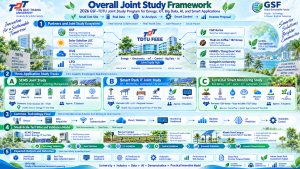
23. Overall Joint Study Framework
24. Expected Outcomes
The main outcome of Session 2 is not large-scale facility construction, but technology validation and development of practical investment models.
Expected outcomes include:
- establishment of a TDTU FEEE Joint Study Team;
- approximately three students per program;
- small-scale SEMS PoC;
- Smart Park IoT PoC;
- TerraChar Smart Monitoring PoC;
- sensor and IoT data collection system;
- real-time dashboard;
- Big Data analysis;
- AI Prediction;
- AI Optimization;
- Automatic Control Logic;
- utilization of Solar Solution field data;
- integration of ITUS AI Energy Management;
- application of LFO AI and Big Data technologies;
- Bao Loc TerraChar Data Model;
- Khanh Hoa Smart Park Data Model;
- ROI and economic feasibility analysis;
- Smart Park investor proposal model.
25. Conclusion
Small Test Site – Real Data – AI Analysis – Smart Control – Investor Model
The purpose of this Joint Study is not to build a large Smart Park at the beginning.
Instead, the program will use the strengths of TDTU FEEE in:
Energy + Electronics + IoT + Big Data + AI + Automatic Control
and apply them to small-scale test sites.
Through these sites, real data will be collected and technology and economic feasibility will be verified across:
SEMS · Smart Park · TerraChar
The results will then be developed into an:
Investor Proposal Model
for future Smart Park investment projects.
Session 2. Chương trình Joint Study GSF–TDTU 2026
Nghiên cứu ứng dụng dựa trên TDTU FEEE về Energy · IoT · Big Data · AI
Thông điệp chính của phần trình bày
Trọng tâm của Session 2 không phải là ngay từ đầu xây dựng các cơ sở Smart Park, SEMS hay TerraChar quy mô lớn.
Thay vào đó, chương trình sẽ tận dụng thế mạnh của Khoa Điện – Điện tử TDTU (TDTU FEEE) trong các lĩnh vực:
Energy + Electronics + IoT + Big Data + AI + Automatic Control
và áp dụng các công nghệ này vào các site thử nghiệm quy mô nhỏ.
Khái niệm cơ bản là:
Small Test Site → Real Data → AI Analysis → Smart Control → Investor Proposal
1. Giới thiệu Session 2
Session 2 của GSF–TDTU Joint Study Program được thiết kế như một chương trình nghiên cứu thực hành lấy TDTU FEEE làm trung tâm.
Vì vậy, các lĩnh vực học thuật và kỹ thuật chính gồm:
- Energy
- IoT
- Big Data
- AI
- Automatic Control
- Monitoring
- Data Acquisition
- Smart Operation
Các công nghệ này sẽ được ứng dụng vào ba lĩnh vực:
SEMS
Quản lý và tối ưu hóa năng lượng
Smart Park
Giám sát và vận hành thông minh các hạng mục trong công viên
TerraChar
Giám sát đất, môi trường và điều khiển tự động
2. Khái niệm cơ bản của Joint Study
Mặc dù ba lĩnh vực ứng dụng khác nhau, cấu trúc công nghệ cơ bản là tương đồng.
Quy trình công nghệ chung
Do đó, nền tảng công nghệ cốt lõi của Joint Study là:
Sensor + IoT + Data + AI + Automation
3. Định hướng triển khai Joint Study
Giai đoạn đầu không tập trung vào đầu tư hạ tầng quy mô lớn.
Thay vào đó, mỗi campus sẽ vận hành một site thử nghiệm quy mô nhỏ để thu thập dữ liệu thực tế và kiểm chứng công nghệ.
Quy trình triển khai
Kết quả này sau đó có thể được sử dụng để xây dựng các đề xuất thực tế cho nhà đầu tư Smart Park, doanh nghiệp và cơ quan công.
4. Program 1 – SEMS Joint Study
Smart Energy · IoT · AI Energy Management
Chương trình cốt lõi đầu tiên là SEMS.
Dựa trên năng lực của TDTU FEEE về điện, điện tử, hệ thống điện và điều khiển, sinh viên sẽ nghiên cứu dữ liệu năng lượng thực tế và tìm hiểu cách AI có thể tối ưu hóa vận hành năng lượng.
Các lĩnh vực nghiên cứu chính gồm:
- Smart Meter
- Solar PV
- Inverter
- ESS
- Load Monitoring
- Peak Management
- Energy Dashboard
- AI Energy Analysis
- Grid Forming
- Smart Grid
5. Hợp tác với Solar Solution JSC
Solar Solution JSC được đề xuất tham gia với vai trò đối tác kỹ thuật hỗ trợ các ứng dụng thực tế về điện mặt trời và năng lượng trong SEMS Joint Study.
Các vai trò có thể gồm:
Solar PV
- phát điện mặt trời;
- vận hành inverter;
- dữ liệu phát điện;
- phân tích hiệu suất hệ thống.
Energy Monitoring
- Smart Meter;
- dữ liệu phụ tải;
- chất lượng điện năng;
- giám sát.
ESS
- giám sát pin;
- sạc / xả;
- quản lý peak.
SEMS Integration
- solar data;
- load data;
- ESS data;
- environmental data.
Sinh viên có thể sử dụng các dữ liệu này để thực hiện phân tích SEMS thực tế.
Tài liệu tham khảo:
Solar Solution – SEMS Joint Study
https://g-smartfuture.com/forums/topic/solar-solution-sems-joint-study/
6. Sự tham gia của ITUS
ITUS được đề xuất hỗ trợ SEMS Joint Study chủ yếu trong lĩnh vực quản lý tiêu thụ năng lượng dựa trên AI và phân tích dữ liệu.
Các lĩnh vực tham gia chính gồm:
- AI Energy Management
- Energy Consumption Analysis
- Peak Demand Analysis
- Abnormal Consumption Detection
- PV / BESS Simulation
- ROI Analysis
- Student Technical Mentoring
Thông qua hợp tác này, sinh viên có thể phân tích dữ liệu điện thực tế và nghiên cứu các mô hình tối ưu năng lượng ứng dụng AI.
Tài liệu tham khảo:
ITUS Participation in the 2026 GSF–TDTU SEMS Joint Study
https://g-smartfuture.com/forums/topic/itus-participation-in-the-2026-gsf-tdtu-sems-joint-study/
7. Nhóm sinh viên SEMS
Khoảng 3 sinh viên
Sinh viên 1 – Energy & IoT
Nhiệm vụ chính:
- Smart Meter
- Sensor
- Inverter
- Gateway
- Energy Data Collection
Sinh viên 2 – Big Data & AI
Nhiệm vụ chính:
- Data Cleaning
- Time-Series Analysis
- Demand Forecasting
- Peak Analysis
- AI Prediction
Sinh viên 3 – Control & Simulation
Nhiệm vụ chính:
- ESS Simulation
- Peak Shaving
- PV Self-Consumption
- Automatic Control
- ROI Simulation
8. Câu hỏi nghiên cứu cốt lõi của SEMS
Có thể trình bày câu hỏi nghiên cứu trung tâm như sau:
“Làm thế nào để thu thập dữ liệu phát điện mặt trời và tiêu thụ điện thực tế thông qua IoT, sau đó tối ưu hóa vận hành năng lượng và ESS bằng phân tích AI?”
9. Program 2 – Smart Park IT Joint Study
IoT · Monitoring · Automation · AI
Chương trình thứ hai tập trung vào Smart Park.
Trọng tâm không phải là xây dựng công viên quy mô lớn, mà là nghiên cứu các công nghệ IT cần thiết cho vận hành thông minh.
Các đối tượng nghiên cứu chính gồm:
- Smart Lighting
- Solar Canopy
- Smart Bench
- Smart Irrigation
- Environmental Sensors
- Smart Café
- Visitor Monitoring
- Facility Monitoring
10. Cấu trúc IT của Smart Park
Cấu trúc kỹ thuật cơ bản:
11. Nghiên cứu điều khiển tự động Smart Park
Sinh viên có thể nghiên cứu các chức năng điều khiển thực tế như:
Lighting Control
- điều khiển chiếu sáng theo thời gian;
- điều khiển theo lượng khách;
- tiết kiệm năng lượng.
Irrigation Control
- độ ẩm đất;
- dữ liệu thời tiết;
- tưới tự động.
Energy Control
- điện mặt trời;
- pin lưu trữ;
- quản lý phụ tải.
Facility Monitoring
- phát hiện bất thường;
- dự báo hỏng hóc;
- hỗ trợ bảo trì.
Visitor Analysis
- thời gian tham quan;
- mô hình sử dụng;
- tỷ lệ sử dụng thiết bị.
12. Site thử nghiệm Smart Park quy mô nhỏ
Ở giai đoạn đầu, site Smart Park nên được duy trì ở quy mô nhỏ.
Quy mô đề xuất:
500㎡ – 2.000㎡
Cấu hình cơ bản có thể gồm:
- 1 Solar Canopy
- 1–2 Smart Benches
- Smart Lighting
- Smart Meter
- IoT Gateway
- Environmental Sensors
- Smart Irrigation
- Monitoring Dashboard
Quy mô này đã đủ để thu thập dữ liệu thực tế và trình diễn các công nghệ cốt lõi cho nhà đầu tư trong tương lai.
13. Program 3 – TerraChar Smart Monitoring Study
Soil Sensor · IoT · Data · AI · Automatic Control
Chương trình thứ ba là TerraChar.
Ở đây, trọng tâm không phải là nông nghiệp thuần túy mà là ứng dụng các công nghệ IT theo góc nhìn FEEE vào giám sát môi trường và nông nghiệp.
Các công nghệ chính gồm:
- Soil Moisture Sensor
- Soil Temperature Sensor
- pH Sensor
- EC Sensor
- Weather Sensor
- Irrigation Monitoring
- Pump Control
- Environmental Monitoring
14. Cấu trúc nghiên cứu IT cho TerraChar
15. Các chủ đề nghiên cứu chính của TerraChar
Sinh viên có thể so sánh khu vực có áp dụng TerraChar và khu vực không áp dụng.
Dữ liệu so sánh
- độ ẩm đất;
- nhiệt độ đất;
- pH;
- EC;
- lượng nước tưới;
- điều kiện thời tiết;
- sinh trưởng cây trồng.
Câu hỏi nghiên cứu chính
“TerraChar ảnh hưởng như thế nào đến điều kiện đất và hiệu quả tưới, và có thể tiết kiệm bao nhiêu nước và năng lượng nhờ hệ thống tưới tự động dựa trên AI?”
16. Vận hành các site thử nghiệm theo khu vực
Ba site khu vực nên được vận hành dưới dạng site trình diễn quy mô nhỏ, không phải là dự án phát triển hoàn chỉnh ngay từ đầu.
HCMC Campus
Smart Energy IT Test Site
Đối tượng:
Một tòa nhà hoặc một khu vực phụ tải điện được lựa chọn
Nội dung nghiên cứu chính:
- SEMS
- Smart Meter
- Solar Data
- AI Energy Analysis
- ESS Simulation
Mục đích:
Urban Smart Energy Model
Bao Loc Campus
TerraChar + Smart Agriculture IT Test Site
Bảo Lộc có thể được mở rộng trong tương lai thành khu Smart Park và TerraChar quy mô khoảng 3ha.
Tuy nhiên, trong giai đoạn Joint Study ban đầu, chỉ nên sử dụng một phần nhỏ làm test bed.
Quy mô ban đầu đề xuất:
Khoảng 500㎡ – 1.000㎡
Nội dung nghiên cứu chính:
- Soil Sensor
- IoT
- Weather Data
- TerraChar
- Smart Irrigation
- AI Analysis
Mục đích:
Thu thập dữ liệu thực tế phục vụ cho kế hoạch phát triển 3ha trong tương lai và xây dựng tài liệu đề xuất đầu tư.
Khanh Hoa Campus
Coastal Smart Park IT Test Site
Quy mô ban đầu đề xuất:
Khoảng 500㎡ – 1.500㎡
Nội dung nghiên cứu chính:
- Smart Lighting
- Solar Canopy
- Environmental Sensors
- Visitor Monitoring
- Smart Park Dashboard
- AI Operation Analysis
Mục đích:
Phát triển mô hình đầu tư Smart Park kết hợp Tourism và Wellness trong tương lai.
17. Mục tiêu của các test site
Mục tiêu của mỗi test site không phải là hoàn thiện toàn bộ cơ sở vật chất.
Các mục tiêu cốt lõi gồm:
1. Technology Validation
Công nghệ có hoạt động trong điều kiện thực tế hay không?
2. Data Validation
Có thể thu thập dữ liệu cần thiết một cách ổn định hay không?
3. AI Validation
Phân tích AI có giúp cải thiện vận hành hay không?
4. Control Validation
Có thể thực hiện điều khiển tự động hay không?
5. Economic Validation
Mô hình có khả thi về kinh tế khi mở rộng hay không?
6. Investor Demonstration
Có thể trình bày dữ liệu hiệu suất thực tế cho nhà đầu tư hay không?
18. Mô hình đề xuất cho nhà đầu tư Smart Park
Một trong những kết quả chính của Joint Study là phát triển Smart Park Investor Proposal Model.
Sinh viên và chuyên gia có thể cùng chuẩn bị các gói tài liệu sau.
Technical Package
- System Architecture
- Sensor Layout
- IoT Structure
- Network Diagram
- Data Architecture
- Automatic Control Logic
Data Package
- Energy Data
- Environmental Data
- Facility Data
- AI Analysis
- Prediction Results
Economic Package
- khái niệm CAPEX
- OPEX
- Energy Saving
- ROI
- Payback Period
- Expansion Cost
Presentation Package
- Pilot Site
- Dashboard
- Real-Time Data
- AI Results
- Investment Concept
19. Cơ cấu tham gia của sinh viên
Mỗi chương trình dự kiến có khoảng 3 sinh viên tham gia.
Chương trình Sinh viên Nội dung nghiên cứu chính SEMS Khoảng 3 Energy · IoT · AI Smart Park Khoảng 3 IoT · Monitoring · Automation TerraChar Khoảng 3 Sensor · Data · AI Control Tổng cộng Khoảng 9 Cấu trúc nhóm cơ bản:
3 Sinh viên + Giảng viên TDTU FEEE + Chuyên gia GSF + Đối tác doanh nghiệp
20. Quy trình học tập của sinh viên
Phase 1. Technology Study
- Sensor
- IoT
- Energy
- Data
- AI
- Control
Phase 2. Test Site Design
- Sensor Layout
- Gateway
- Network
- Database
- Dashboard
Phase 3. Installation
- lắp đặt thiết bị;
- thiết lập truyền thông;
- kiểm tra dữ liệu.
Phase 4. Data Collection
- Real-Time Data
- Historical Data
- Data Cleaning
Phase 5. Big Data & AI
- Pattern Analysis
- Forecasting
- Anomaly Detection
- Optimization
Phase 6. Automatic Control
- Control Logic
- Simulation
- Field Test
Phase 7. Investor Model
- báo cáo kỹ thuật;
- phân tích kinh tế;
- ROI;
- đề xuất đầu tư.
21. Định nghĩa vai trò của các đối tác
TDTU FEEE
- Energy
- Electronics
- IoT
- Control
- Data
- AI
- Student Research
GSF
- lập kế hoạch Joint Study
- hợp tác quốc tế
- kết nối chuyên gia
- kết nối doanh nghiệp
- phát triển dự án
Solar Solution JSC
- Solar PV
- Inverter
- Smart Meter
- Field Data
- SEMS PoC
ITUS
- AI Energy Management
- Data Analysis
- Energy Optimization
- Student Mentoring
LFO
- AI
- Big Data
- Dashboard
- Smart Operation
C&P Korea
- kết nối công nghệ TerraChar
- hỗ trợ thí điểm
- kết nối doanh nghiệp công nghệ Hàn Quốc
Thuận An Coffee / T&T Group
- Coffee Field
- TerraChar Application
- Agricultural Data
VINABS / Dong Duoc Viet
- hợp tác hiện trường tại Khánh Hòa
- mô hình vận hành Smart Park
- liên kết Tourism · Wellness
Dongshin University
- Energy
- AI
- Grid Technology
- Joint Research
- Student Exchange
22. Công nghệ chung của ba lĩnh vực ứng dụng
Mặc dù ứng dụng khác nhau, công nghệ cốt lõi là tương đồng.
SEMS
Energy → Sensor → IoT → Data → AI → Control
Smart Park
Facility → Sensor → IoT → Monitoring → AI → Smart Operation
TerraChar
Soil → Sensor → IoT → Data → AI → Irrigation Control
Do đó, Joint Study có thể được tóm tắt theo một trục công nghệ chung:
Energy + IoT + Big Data + AI + Automatic Control
23. Khung tổng thể của Joint Study
24. Kết quả kỳ vọng
Kết quả chính của Session 2 không phải là xây dựng cơ sở quy mô lớn, mà là kiểm chứng công nghệ và phát triển mô hình đầu tư thực tế.
Các kết quả kỳ vọng gồm:
- thành lập TDTU FEEE Joint Study Team;
- khoảng 3 sinh viên cho mỗi chương trình;
- SEMS PoC quy mô nhỏ;
- Smart Park IoT PoC;
- TerraChar Smart Monitoring PoC;
- hệ thống thu thập dữ liệu Sensor và IoT;
- Real-Time Dashboard;
- phân tích Big Data;
- AI Prediction;
- AI Optimization;
- Automatic Control Logic;
- sử dụng dữ liệu thực địa từ Solar Solution;
- tích hợp ITUS AI Energy Management;
- ứng dụng công nghệ AI và Big Data của LFO;
- phát triển Bao Loc TerraChar Data Model;
- phát triển Khanh Hoa Smart Park Data Model;
- phân tích ROI và tính khả thi kinh tế;
- phát triển Smart Park Investor Proposal Model.
25. Kết luận
Small Test Site – Real Data – AI Analysis – Smart Control – Investor Model
Mục tiêu của Joint Study này không phải là xây dựng Smart Park quy mô lớn ngay từ đầu.
Thay vào đó, chương trình sẽ tận dụng thế mạnh của TDTU FEEE trong:
Energy + Electronics + IoT + Big Data + AI + Automatic Control
và áp dụng chúng vào các site thử nghiệm quy mô nhỏ.
Thông qua các site này, dữ liệu thực tế sẽ được thu thập và tính khả thi về công nghệ cũng như kinh tế sẽ được kiểm chứng trong ba lĩnh vực:
SEMS · Smart Park · TerraChar
Kết quả sau đó sẽ được phát triển thành:
Investor Proposal Model
Session 2. 2026 GSF–TDTU Joint Study Program
TDTU FEEE 기반 Energy · IoT · Big Data · AI 응용 스터디
발표 핵심 메시지
이번 Session 2의 중심은 Smart Park, SEMS, TerraChar 자체를 크게 구축하는 것이 아니라, TDTU FEEE의 전기·전자·에너지·IoT·제어·데이터·AI 역량을 실제 소규모 테스트 사이트에 적용하는 공동 스터디 모델을 만드는 것입니다.
핵심 방향은 다음과 같습니다.
Small Test Site → Real Data → AI Analysis → Smart Control → Investor Proposal
1. Session 2 소개
GSF–TDTU Joint Study Program의 Session 2는 TDTU Faculty of Electrical & Electronics Engineering(FEEE)와의 공동 스터디를 중심으로 구성합니다.
따라서 주요 연구분야는 다음과 같습니다.
- Energy
- IoT
- Big Data
- AI
- Automatic Control
- Monitoring
- Data Acquisition
- Smart Operation
이 기술들을 다음 세 가지 응용분야에 적용합니다.
SEMS
에너지 관리 및 최적화
Smart Park
스마트 시설 및 운영
TerraChar
토양·환경 모니터링 및 자동제어
2. Joint Study의 기본 개념
세 가지 응용분야는 다르지만, 실제 연구기술 구조는 공통적입니다.
공통 기술 흐름
즉, 본 Joint Study의 핵심은
Sensor + IoT + Data + AI + Automation
입니다.
3. Joint Study 추진 방향
초기 단계에서는 대규모 시설투자를 목표로 하지 않습니다.
각 캠퍼스에 소규모 테스트 사이트를 구축하여 실제 데이터를 수집하고 기술을 검증합니다.
추진 흐름
이 결과는 향후 Smart Park 투자자에게 실제 모델을 제안하기 위한 기초자료로 활용합니다.
4. Program 1 – SEMS Joint Study
Smart Energy · IoT · AI Energy Management
Session 2의 첫 번째 핵심 프로그램은 SEMS입니다.
TDTU FEEE의 에너지·전력·전자·제어기술을 기반으로 실제 전력데이터를 분석하고, AI를 활용하여 에너지 운영을 최적화하는 것을 목표로 합니다.
주요 연구분야는 다음과 같습니다.
- Smart Meter
- Solar PV
- Inverter
- ESS
- Load Monitoring
- Peak Management
- Energy Dashboard
- AI Energy Analysis
- Grid Forming
- Smart Grid
5. Solar Solution JSC 협력
Solar Solution JSC는 SEMS Joint Study에서 실제 태양광 및 에너지 현장기술을 지원하는 파트너로 참여하는 구조를 제안합니다.
주요 역할은 다음과 같습니다.
Solar PV
- 태양광 발전
- Inverter
- 발전량 데이터
- 발전효율 분석
Energy Monitoring
- Smart Meter
- Load Data
- Power Quality
- Monitoring
ESS
- Battery Monitoring
- Charging / Discharging
- Peak Management
SEMS Integration
- Solar Data
- Load Data
- ESS Data
- Environmental Data
이 데이터를 기반으로 학생들은 실제 에너지 분석을 수행할 수 있습니다.
참조:
Solar Solution – SEMS Joint Study
https://g-smartfuture.com/forums/topic/solar-solution-sems-joint-study/
6. ITUS 참여
ITUS는 SEMS Joint Study에서 AI 기반 에너지 소비관리 및 데이터 분석 지원 역할을 수행하는 구조를 제안합니다.
주요 참여분야는 다음과 같습니다.
- AI Energy Management
- Energy Consumption Analysis
- Peak Demand Analysis
- Abnormal Consumption Detection
- PV / BESS Simulation
- ROI Analysis
- Student Technical Mentoring
학생들은 실제 전력데이터를 기반으로 AI 에너지관리 모델을 연구할 수 있습니다.
참조:
ITUS Participation in the 2026 GSF–TDTU SEMS Joint Study
https://g-smartfuture.com/forums/topic/itus-participation-in-the-2026-gsf-tdtu-sems-joint-study/
7. SEMS 학생팀 구성
약 3명
Student 1 – Energy & IoT
주요 역할:
- Smart Meter
- Sensor
- Inverter
- Gateway
- Energy Data Collection
Student 2 – Big Data & AI
주요 역할:
- Data Cleaning
- Time-Series Analysis
- Demand Forecasting
- Peak Analysis
- AI Prediction
Student 3 – Control & Simulation
주요 역할:
- ESS Simulation
- Peak Shaving
- PV Self-Consumption
- Automatic Control
- ROI Simulation
8. SEMS 핵심 연구 질문
발표에서는 다음 질문을 중심으로 설명할 수 있습니다.
연구 질문
“실제 태양광 및 전력소비 데이터를 IoT로 수집하고, AI를 이용하여 에너지 소비와 ESS 운영을 어떻게 최적화할 수 있는가?”
9. Program 2 – Smart Park IT Joint Study
IoT · Monitoring · Automation · AI
두 번째 프로그램은 Smart Park입니다.
이 프로그램에서는 공원 자체의 대규모 개발보다 Smart Park 운영에 필요한 IT 시스템에 집중합니다.
주요 연구대상:
- Smart Lighting
- Solar Canopy
- Smart Bench
- Smart Irrigation
- Environmental Sensor
- Smart Café
- Visitor Monitoring
- Facility Monitoring
10. Smart Park IT 구조
Smart Park의 기본 IT 구조는 다음과 같습니다.
11. Smart Park 자동제어 연구
학생들이 연구할 수 있는 주요 제어기능은 다음과 같습니다.
Lighting Control
- 시간별 조명 제어
- 방문객 기반 조명
- 에너지 절감
Irrigation Control
- 토양수분
- 기상데이터
- 자동관수
Energy Control
- Solar Generation
- Battery
- Load Management
Facility Monitoring
- 이상상태
- 고장예측
- 유지관리
Visitor Analysis
- 방문시간
- 이용패턴
- 시설이용률
12. Smart Park 소규모 테스트 사이트
Smart Park 테스트 사이트는 대규모로 구축하지 않습니다.
초기에는 약
500㎡ ~ 2,000㎡
수준의 소규모 Demonstration Zone을 제안합니다.
구성 예:
- Solar Canopy 1개
- Smart Bench 1~2개
- Smart Lighting
- Smart Meter
- IoT Gateway
- Environmental Sensors
- Smart Irrigation
- Monitoring Dashboard
이 정도 규모에서도 충분히 실제 데이터를 확보할 수 있습니다.
13. Program 3 – TerraChar Smart Monitoring Study
Soil Sensor · IoT · Data · AI · Automatic Control
세 번째 프로그램은 TerraChar입니다.
여기에서도 농업 자체보다는 FEEE 관점의 IT 기술 적용에 중점을 둡니다.
주요 기술:
- Soil Moisture Sensor
- Soil Temperature Sensor
- pH Sensor
- EC Sensor
- Weather Sensor
- Irrigation Monitoring
- Pump Control
- Environmental Monitoring
14. TerraChar IT 연구구조
15. TerraChar 주요 연구내용
학생들은 TerraChar 적용구와 비적용구의 데이터를 비교합니다.
비교 데이터
- 토양수분
- 토양온도
- pH
- EC
- 관수량
- 기상조건
- 작물 생육
핵심 연구 질문
“TerraChar가 토양환경과 관수효율에 어떤 영향을 주며, AI 기반 자동관수를 통해 물과 에너지를 얼마나 절감할 수 있는가?”
16. 지역별 테스트 사이트 운영
세 지역은 각각 대규모 사업장이 아니라 소규모 실증사이트로 운영하는 것을 기본 원칙으로 합니다.
HCMC Campus
Smart Energy IT Test Site
대상:
건물 1개 또는 특정 전력구간
주요 연구:
- SEMS
- Smart Meter
- Solar Data
- AI Energy Analysis
- ESS Simulation
목적:
Urban Smart Energy Model
Bao Loc Campus
TerraChar + Smart Agriculture IT Test Site
Bao Loc은 향후 3ha Smart Park 및 TerraChar 실증단지로 발전할 수 있지만, 초기 Joint Study에서는 그 일부를 소규모 테스트베드로 활용합니다.
초기 규모:
약 500㎡ ~ 1,000㎡
주요 연구:
- Soil Sensor
- IoT
- Weather Data
- TerraChar
- Smart Irrigation
- AI Analysis
목적:
향후 3ha 개발을 위한 실제 데이터 및 투자제안 자료 확보
Khanh Hoa Campus
Coastal Smart Park IT Test Site
초기 규모:
약 500㎡ ~ 1,500㎡
주요 연구:
- Smart Lighting
- Solar Canopy
- Environmental Sensors
- Visitor Monitoring
- Smart Park Dashboard
- AI Operation Analysis
목적:
향후 Tourism · Wellness · Smart Park 투자모델 개발
17. 테스트 사이트의 목적
각 테스트 사이트는 시설을 완성하는 것이 목적이 아닙니다.
첫째, Technology Validation
기술이 실제로 작동하는가?
둘째, Data Validation
필요한 데이터를 안정적으로 수집할 수 있는가?
셋째, AI Validation
AI 분석이 운영 개선에 도움이 되는가?
넷째, Control Validation
자동제어가 가능한가?
다섯째, Economic Validation
확대 적용 시 경제성이 있는가?
여섯째, Investor Demonstration
투자자에게 실제 데이터를 보여줄 수 있는가?
18. Smart Park 투자자 제안모델
Joint Study의 중요한 결과물 중 하나는 Smart Park Investor Proposal Model입니다.
학생과 전문가가 공동으로 다음 자료를 개발합니다.
Technical Package
- System Architecture
- Sensor Layout
- IoT Structure
- Network Diagram
- Data Architecture
- Automatic Control Logic
Data Package
- Energy Data
- Environmental Data
- Facility Data
- AI Analysis
- Prediction Results
Economic Package
- CAPEX 개념
- OPEX
- Energy Saving
- ROI
- Payback Period
- Expansion Cost
Presentation Package
- Pilot Site
- Dashboard
- Real-Time Data
- AI Results
- Investment Concept
19. 학생 참여 구성
프로그램별 약 3명의 학생이 참여합니다.
프로그램 학생 수 주요 스터디 SEMS 약 3명 Energy · IoT · AI Smart Park 약 3명 IoT · Monitoring · Automation TerraChar 약 3명 Sensor · Data · AI Control 합계 약 9명 기본 구성:
3 Students + TDTU FEEE Professor + GSF Expert + Industry Partner
20. 학생 스터디 진행과정
Phase 1. Technology Study
- Sensor
- IoT
- Energy
- Data
- AI
- Control
Phase 2. Test Site Design
- Sensor Layout
- Gateway
- Network
- Database
- Dashboard
Phase 3. Installation
- 장비 설치
- 통신 연결
- 데이터 확인
Phase 4. Data Collection
- Real-Time Data
- Historical Data
- Data Cleaning
Phase 5. Big Data & AI
- Pattern Analysis
- Forecasting
- Anomaly Detection
- Optimization
Phase 6. Automatic Control
- Control Logic
- Simulation
- Field Test
Phase 7. Investor Model
- 기술보고서
- 경제성
- ROI
- 투자제안
21. 참여기관 역할 정의
TDTU FEEE
- Energy
- Electronics
- IoT
- Control
- Data
- AI
- Student Research
GSF
- Joint Study 기획
- 국제협력
- 전문가 연결
- 기업 연결
- 프로젝트 개발
Solar Solution JSC
- Solar PV
- Inverter
- Smart Meter
- Field Data
- SEMS PoC
ITUS
- AI Energy Management
- Data Analysis
- Energy Optimization
- Student Mentoring
LFO
- AI
- Big Data
- Dashboard
- Smart Operation
C&P Korea
- TerraChar 기술연계
- 실증지원
- 한국 기술기업 연결
Thuận An Coffee / T&T Group
- Coffee Field
- TerraChar Application
- Agricultural Data
VINABS / Dong Duoc Viet
- Khanh Hoa 현장협력
- Smart Park 운영모델
- Tourism · Wellness 연계
Dongshin University
- Energy
- AI
- Grid Technology
- Joint Research
- Student Exchange
22. 3개 응용분야의 공통 기술
세 프로그램의 적용분야는 서로 다르지만, 공통 기술은 동일합니다.
SEMS
Energy → Sensor → IoT → Data → AI → Control
Smart Park
Facility → Sensor → IoT → Monitoring → AI → Smart Operation
TerraChar
Soil → Sensor → IoT → Data → AI → Irrigation Control
따라서 Joint Study를 하나의 기술축으로 정리하면:
Energy + IoT + Big Data + AI + Automatic Control
입니다.
23. 전체 Joint Study Framework
24. 기대성과
이번 Session 2의 성과는 대규모 시설을 구축하는 것보다 기술 검증과 투자모델을 만드는 것에 중점을 둡니다.
주요 기대성과는 다음과 같습니다.
- TDTU FEEE Joint Study Team 구축
- 프로그램별 약 3명의 학생 참여
- SEMS 소규모 PoC
- Smart Park IoT PoC
- TerraChar Smart Monitoring PoC
- Sensor & IoT 데이터 시스템
- Real-Time Dashboard
- Big Data 분석
- AI Prediction
- AI Optimization
- Automatic Control Logic
- Solar Solution 현장데이터 활용
- ITUS AI Energy Management 연계
- LFO AI·Big Data 기술 적용
- Bao Loc TerraChar Data Model
- Khanh Hoa Smart Park Data Model
- ROI 및 경제성 분석
- Smart Park 투자제안 모델 개발
25. 발표 결론
Small Test Site – Real Data – AI Analysis – Smart Control – Investor Model
이번 Joint Study의 핵심은 처음부터 대규모 Smart Park를 건설하는 것이 아닙니다.
TDTU FEEE가 가진 강점인
Energy + Electronics + IoT + Big Data + AI + Automatic Control
을 실제 소규모 테스트 사이트에 적용하는 것입니다.
이를 통해 실제 데이터를 확보하고,
SEMS · Smart Park · TerraChar
세 가지 응용분야에서 기술과 경제성을 검증합니다.
그 결과를 다시
Investor Proposal Model
로 발전시켜 향후 실제 Smart Park 투자 프로젝트로 연결하는 것이 Session 2의 최종 방향입니다.
Attachments:
You must be logged in to view attached files. -
AuthorPosts
- You must be logged in to reply to this topic.